
1. What Are Carbide Trimming Tools?
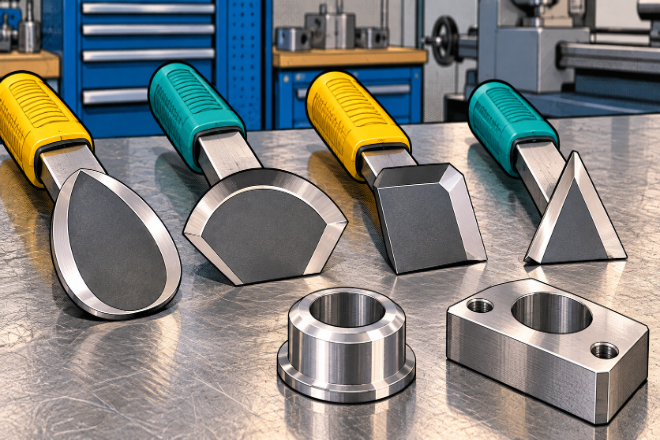
Carbide trimming tools are precision cutting tools made with tungsten carbide materials.
They are mainly used for trimming edges, removing burrs, eliminating excess material, and improving the final shape of industrial parts.
Unlike general cutting tools that focus on removing large amounts of material, carbide trimming tools are designed for controlled and accurate finishing operations.
During manufacturing, many parts need additional edge treatment after processes such as:
CNC machining
molding
casting
cắt
khoan
forming
These processes can leave behind unwanted areas, including:
sharp edges
small metal pieces
plastic flash
uneven surfaces
machining marks
A carbide trimming tool helps remove these problems without damaging the main structure of the workpiece.
The cutting part of these tools is usually made from tungsten carbide, which is known for its high độ cứng Và Khả năng chống mài mòn.
This allows the tool to keep its cutting edge for a longer time compared with many traditional tool materials.
For manufacturers, this means:
fewer tool replacements
more stable production
better surface quality
lower long-term machining costs
2. How Do Carbide Trimming Tools Work?
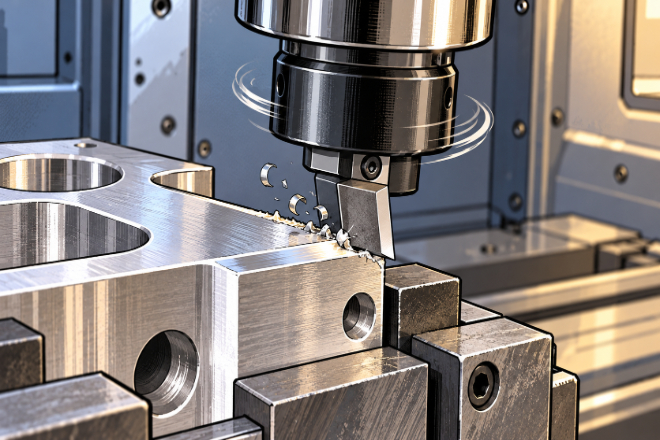
The working principle of carbide trimming tools is simple: the sharp carbide edge contacts the workpiece and removes unwanted material through controlled cutting action.
However, the actual process depends on several important factors, including tool design, material type, cutting speed, and machining conditions.
1). The Cutting Edge Removes Extra Material
The most important part of a carbide trimming tool is the cutting edge.
When the tool moves along the surface of a component, the carbide edge cuts away:
excess material
burrs
unwanted corners
rough areas
Because tungsten carbide is extremely hard, the cutting edge can maintain its shape during continuous machining.
This is especially important when working with materials that can quickly wear normal tools, such as:
stainless steel
aluminum alloys
hardened metals
engineering plastics
composite materials
2). The Tool Geometry Controls the Finishing Result
Not every trimming job requires the same tool design.
Different carbide trimming tools can have different:
edge shapes
cutting angles
flute designs
tooth patterns
These designs affect how the tool removes material.
Ví dụ:
A tool with a sharper edge may provide a smoother finish for precision parts.
A tool with stronger cutting geometry may be better for removing larger amounts of unwanted material.
Manufacturers usually select tool geometry based on:
workpiece material
required surface finish
machining speed
production volume
Choosing the correct design helps balance cutting performance and tool life.
3). High-Speed Rotation Creates Efficient Cutting
Many carbide trimming tools are used with CNC machines or rotary equipment.
During operation, the tool rotates at high speed while the workpiece remains fixed or moves according to the machining path.
The rotating cutting edge creates repeated small cutting actions, allowing the tool to:
remove material smoothly
follow complex shapes
reach small areas
maintain consistent finishing quality
This makes carbide trimming tools suitable for applications where accuracy is more important than aggressive material removal.
3. Why Are Tungsten Carbide Materials Used for Trimming Tools?
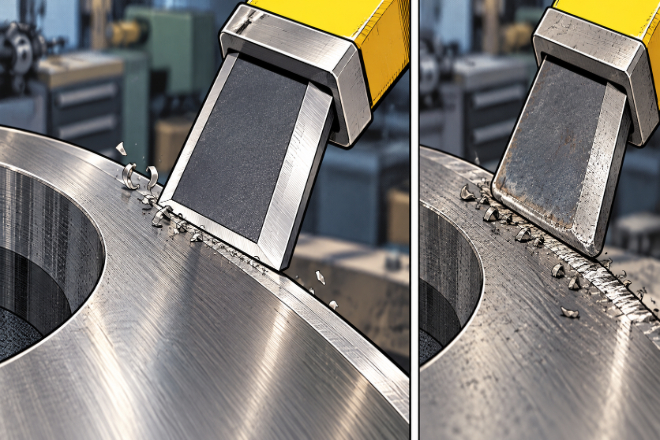
The performance of dụng cụ cắt cacbua mainly comes from tungsten carbide.
Tungsten carbide is a hard material commonly used in industrial cutting tools because it offers a strong combination of độ cứng Và khả năng chống mài mòn.
Compared with many traditional tool materials, tungsten carbide provides several advantages.
4. What Are Carbide Trimming Tools Used For?
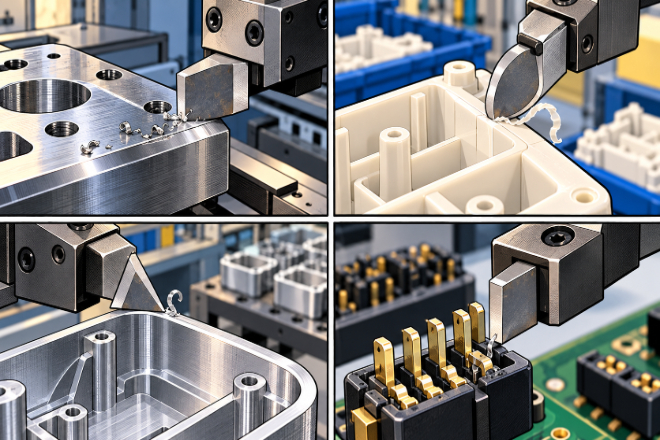
Carbide trimming tools are used in many industries where precision edge finishing is required.
1). CNC Machining
In CNC manufacturing, even a small burr can create problems during assembly.
Carbide trimming tools are commonly used for:
removing machining burrs
improving edge quality
finishing complex shapes
preparing parts for assembly
They are especially useful when manufacturers need repeatable results across large production batches.
2). Plastic Mold Manufacturing
Plastic parts often have extra material around the molding area.
This excess material, often called flash, needs to be removed carefully.
Carbide trimming tools help manufacturers achieve:
cleaner mold edges
smoother surfaces
better fitting between components
Because mold parts require high accuracy, precision carbide tools are often preferred for final finishing work.
3). Aluminum and Metal Components
Aluminum parts are widely used because they are lightweight and easy to machine. However, machining aluminum can still create sharp edges and unwanted material.
Carbide trimming tools can help process:
aluminum housings
mechanical components
precision brackets
industrial parts
They provide controlled cutting without damaging the final shape.
4). Electronic and Precision Components
Small electronic parts often require extremely accurate finishing.
Examples include:
connectors
small metal parts
precision assemblies
In these applications, even a small surface defect can affect product performance.
Carbide trimming tools help create clean edges and stable dimensions.
5. What Are the Benefits of Using Carbide Trimming Tools?
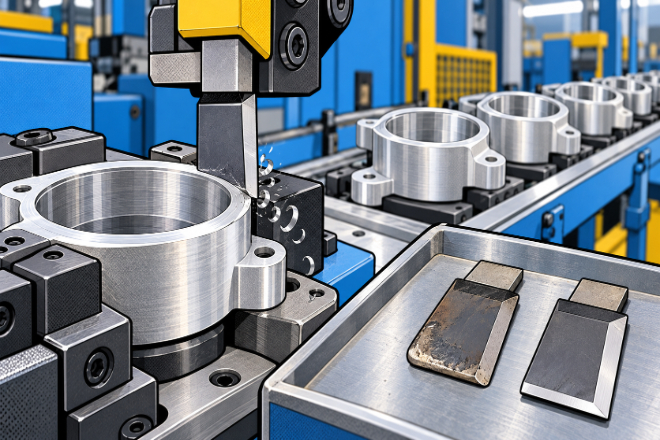
For manufacturers, selecting the right finishing tool is not only about cutting performance. It is also about production stability and long-term cost.
1). Tuổi thọ dụng cụ dài hơn
The high khả năng chống mài mòn of tungsten carbide allows trimming tools to work longer before replacement.
This reduces:
machine downtime
maintenance frequency
production interruptions
2). Better Finishing Quality
A stable cutting edge helps create:
smoother surfaces
cleaner edges
more consistent dimensions
This is especially valuable for industries where appearance and precision are important.
3). Improved Production Efficiency
When tools maintain performance for longer periods, manufacturers can improve overall workflow.
Các lợi ích bao gồm:
fewer tool changes
more predictable production schedules
reduced operating costs
4). Suitable for Modern Materials
Today’s manufacturers work with more advanced materials than before.
Many lightweight and high-strength materials are difficult to process with standard tools.
Carbide trimming tools provide better performance when machining challenging materials.
6. How to Choose the Right Carbide Trimming Tools?
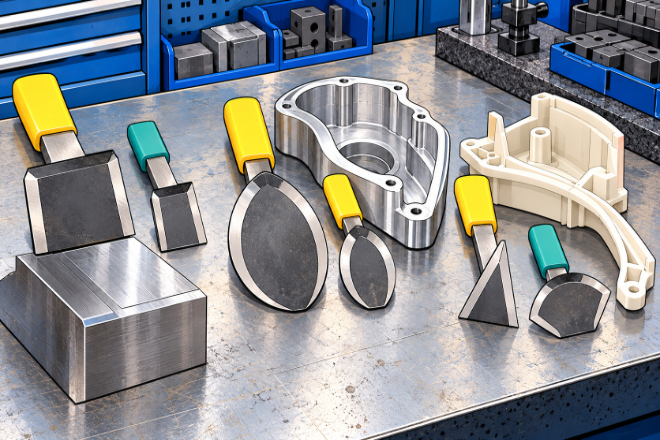
Selecting the correct carbide trimming tool requires considering several factors.
 English
 Español
 简体中文
 Français
 日本語
 한국어
 العربية
 Tiếng Việt