
1. What Causes Tungsten Carbide Burrs to Chatter During Grinding?
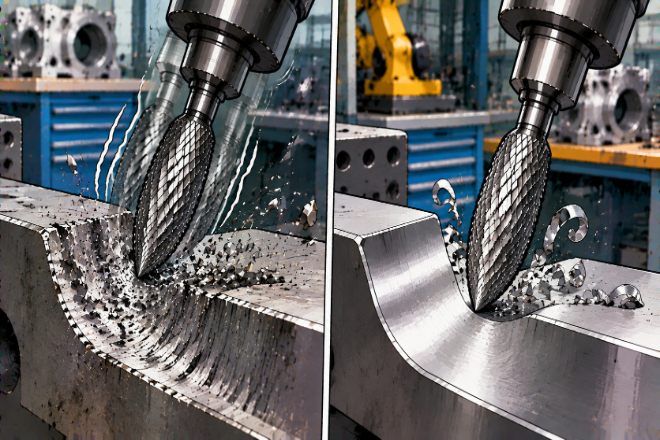
When a tungsten carbide burr starts to chatter, the problem is usually not the carbide material itself.
The issue often comes from the relationship between the burr, the machine, the workpiece, and the cutting conditions.
Chatter is a vibration problem. During grinding or rotary cutting, the burr contacts the material at high speed.
If the cutting force is not stable, the tool can begin to bounce slightly against the surface.
This repeated movement creates the familiar vibration sound. Many operators describe it as a “jumping” or “singing” tool.
The main causes include:
Incorrect RPM
Excessive tool pressure
Poor tool holding
Long tool overhang
Wrong burr shape
Damaged cutting teeth
Incorrect application method
The problem becomes more serious in industrial environments where carbide burrs are used for long periods.
For example, a manufacturer may use tungsten carbide burrs for:
Weld removal
Edge finishing
Deburring
Mold repair
Pump component repair
Automotive parts
Aerospace components
In each application, stability matters. A burr that works smoothly can remove material quickly. A burr that chatters wastes time.
It can leave unwanted marks on the surface, increase finishing work, and shorten tool life. For companies using carbide burrs regularly, chatter is not just a tool problem. It becomes a productivity problem.
A few seconds of vibration on one part may not seem important. However, when repeated across thousands of components, small inefficiencies become significant production costs.
This is why controlling chatter should be part of the machining process. The solution is usually not simply buying a harder burr.
Tungsten carbide already provides excellent hardness and wear resistance, which is why carbide tools are widely used in demanding cutting applications.
The better approach is finding the reason behind the vibration.
2. How Does Incorrect RPM Create Carbide Burr Chatter?
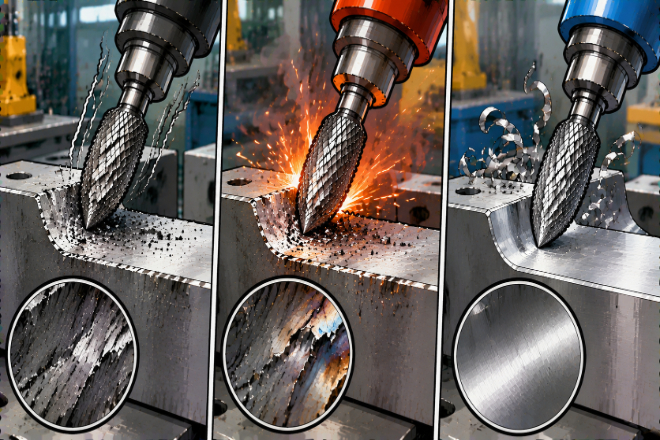
RPM is one of the first things to check when chatter appears. A tungsten carbide burr needs the correct speed to cut efficiently.
If the speed is too low, the burr may not cut properly. Instead of removing material smoothly, the cutting teeth may rub against the surface.
The operator often reacts by pushing harder. This creates more vibration. If the speed is too high, another problem appears.
The cutting edges may generate excessive heat. The burr can lose cutting performance, and the workpiece surface may become damaged.
A simple way to understand RPM is: The burr needs enough speed to cut, but not so much speed that the cutting action becomes unstable.
The correct RPM depends on:
Burr diameter
Material type
Burr cut style
Machine power
Application
A larger burr usually requires a lower RPM because the cutting diameter creates a higher surface speed. A smaller burr can normally operate at a higher RPM.
For example:
3. Can Excessive Pressure Cause Carbide Burr Vibration?
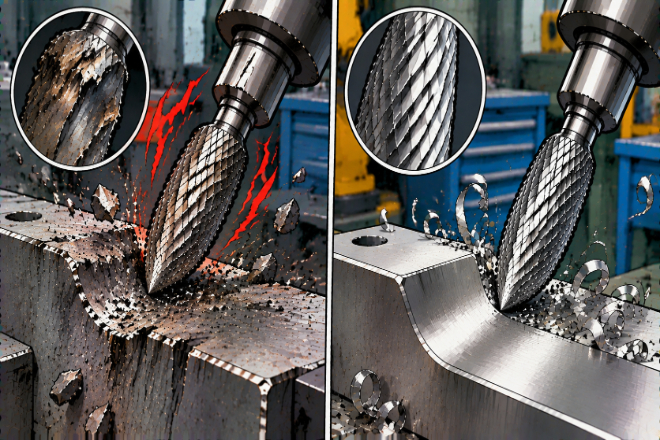
Yes. One of the most common mistakes with tungsten carbide burrs is using too much force.
Many operators think: “If the burr is not cutting fast enough, push harder.” Unfortunately, carbide burrs do not work like a cutting blade that needs heavy pressure.
The teeth are designed to remove material through rotation. Too much pressure creates several problems:
Increased vibration
Higher cutting temperature
Faster tooth wear
Poor surface finish
Greater risk of burr damage
When excessive force is applied, the cutting edges cannot work properly. Instead of cutting cleanly, the burr starts bouncing on the surface.
This creates chatter. A better approach is to allow the burr to cut naturally. The operator should guide the tool rather than force it.
For automated systems, this becomes even more important. A robot cannot adjust pressure by feeling the material.
The programmed feed rate and tool path must already be optimized. For production managers, reducing operator pressure through training can significantly improve tool performance.
A carbide burr that lasts longer is not always the one with the strongest material. It is often the one used correctly.
4. How Do Tool Holding and Overhang Affect Chatter?
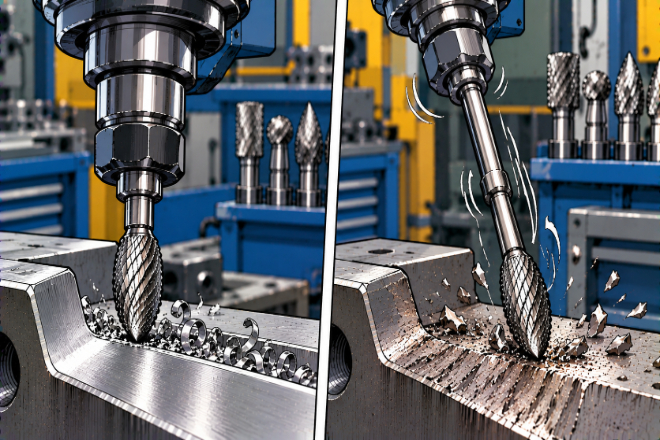
The connection between the burr and the machine is extremely important.
Even a high-quality tungsten carbide burr can chatter if it is not mounted correctly. Several issues can create instability:
1). Poor Collet Condition
A worn or damaged collet cannot hold the burr securely. Small movements during rotation create vibration.
2). Excessive Overhang
Overhang means the length of the burr extending from the holder. A longer extension may help reach difficult areas.
However, too much extension acts like a longer lever. The tool becomes less rigid. This increases vibration.
A simple rule: Use the shortest burr length that can safely reach the working area.
3). Poor Tool Balance
High-speed rotation requires good balance. If the burr is not centered correctly, the cutting force changes during each rotation.
This creates uneven contact with the material. The result is chatter.
This is especially important for automated deburring systems and CNC applications where consistent results are required.
A stable setup includes:
Correct collet size
Clean tool holder
Proper burr installation
Minimal overhang
Good spindle condition
Many companies focus heavily on burr quality but ignore the machine setup. However, the burr and the machine work as one system.
5. How Does Burr Shape Influence Grinding Stability?
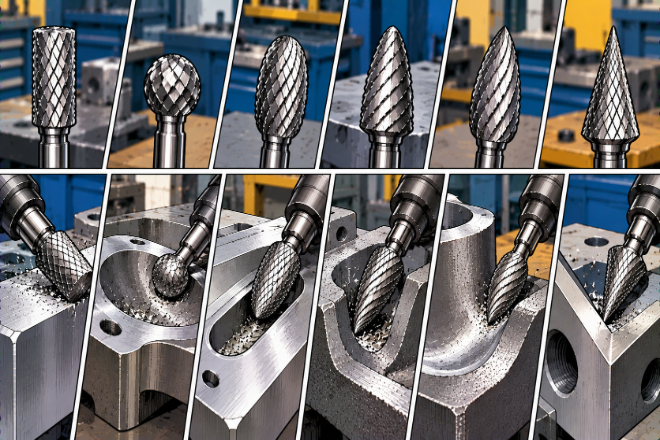
The shape of the carbide burr also affects chatter. Different shapes create different contact patterns. A burr that matches the surface usually produces smoother cutting.
Common shapes include:
Cylindrical
Cylindrical radius-end
Ball
Oval
Tree
Flame
Cone
For example: A cylindrical burr works well on flatter surfaces. A ball burr is better for curved areas. A flame burr can reach narrow profiles.
Using the wrong shape can create unstable contact. Imagine using a flat tool on a curved surface. Only a small area touches the workpiece. The cutting force becomes concentrated.
This increases vibration. The correct burr shape spreads the cutting action more evenly. This is especially important for:
Mold repair
Aerospace components
Automotive parts
Internal passages
Complex castings
Companies should select burr shapes based on the actual geometry of the part. The fastest burr is not always the most stable burr.
A tool that follows the surface naturally will usually perform better.
6. How Do Damaged Burrs Create Chatter Problems?
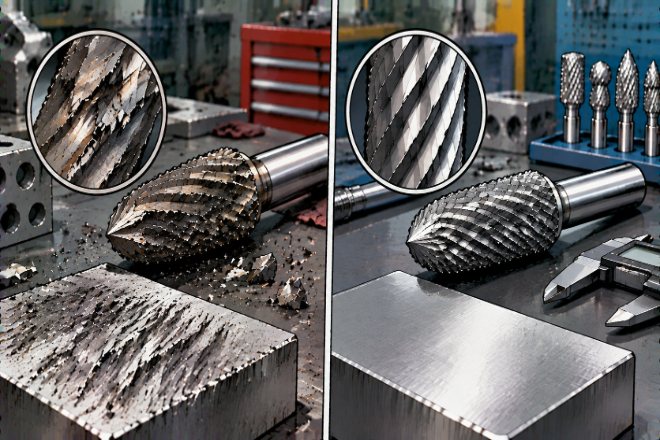
Sometimes the problem is not the process. The burr itself may already be damaged.
A worn carbide burr can create unstable cutting because the teeth no longer remove material evenly.
Signs of a damaged burr include:
Increased vibration
Higher noise
Poor surface finish
Reduced cutting ability
Visible tooth damage
Some users continue using a worn burr by increasing pressure. This usually makes the problem worse. A damaged burr creates more heat and more vibration.
Replacing the tool earlier may actually reduce total cost.
For companies managing production lines, tool replacement should not only depend on whether the burr can still remove material.
The better question is: “Can the burr still produce the required result?”
A tool that produces poor quality parts is already expensive. Regular inspection helps prevent unexpected failures.
Check:
Cutting edges
Shank condition
Surface finish results
Vibration during use
Good tool management reduces chatter before it becomes a production issue.
7. How Can Companies Reduce Carbide Burr Chatter in Production?
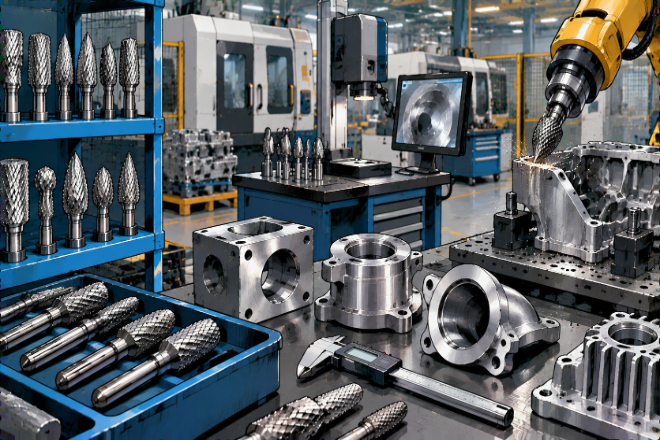
Reducing chatter requires a complete approach. There is rarely one single solution. Companies should review several factors:
1). Select the Correct Burr
Choose the burr based on:
Material
Shape
Cutting requirement
Surface finish
2). Optimize Machine Settings
Check:
RPM
Feed rate
Tool angle
Contact pressure
3). Improve Operator Training
Operators should understand that carbide burrs need controlled movement, not excessive force.
4). Maintain Equipment
Regularly inspect:
Spindles
Collets
Holders
Rotary tools
5). Test Before Full Production
For automated or high-volume applications, test the complete process before large-scale use. A few minutes of testing can prevent hours of production problems.
The goal is simple: Stable cutting.
Stable cutting creates:
Longer tool life
Better surface quality
Lower downtime
More predictable costs
 English
  Español
  简体中文
简体中文  Français
  日本語
日本語  한국어
한국어  العربية
  Tiếng Việt